Sri Sai Nuts & Spices
Premium quality nuts, dry fruits & spices from Chennai
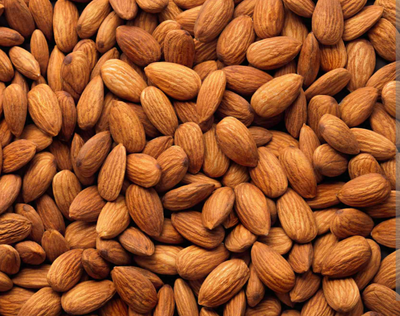
Almond
Almonds (பாதாம்) – crunchy, protein-rich kernels that work as an everyday snack and as the backbone of South Indian sweets and gravies.
These are whole, unsalted almond kernels with a firm bite and a clean, faintly sweet flavour, suited equally to eating raw and to cooking. Soak a handful overnight and the skins slip off easily, leaving the softer, sweeter badam most families prefer at breakfast.
In the kitchen almonds carry a lot of weight. Ground to a paste they thicken korma and kurma gravies without any dairy. Slivered and fried in ghee they finish badam halwa, kesari and payasam. Blended with milk, cardamom and a little palm sugar they make badam milk, still the most requested drink at Chennai weddings and festival lunches.
Nutritionally, almonds are a good source of plant protein, dietary fibre, vitamin E and monounsaturated fats, which is why they turn up in lunchboxes and post-workout snacks alike.
Store in an airtight container away from heat and direct sunlight. In Chennai's humidity, refrigerate if you are keeping them beyond a couple of months: cold storage slows the oils from turning and preserves the crunch.
Order online or over WhatsApp, with cash on delivery available.
₹70
₹140 / 100g
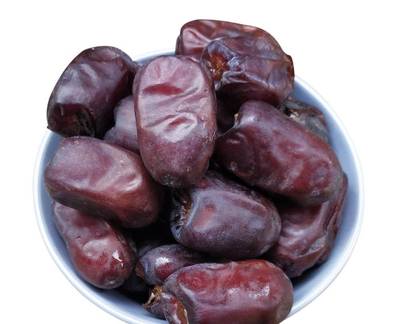
Black Dates
Black dates (கருப்பு பேரிச்சம்பழம்) – soft, deeply sweet and iron-rich, the date most South Indian households keep for everyday energy rather than occasions.
These are dark, wrinkled, semi-dry dates with a chewy texture and a caramel-molasses sweetness that is less sugary and more rounded than the paler varieties. They hold their shape when chopped, which makes them easier to cook with than very soft dates.
The traditional use here is the simplest one: two or three with a glass of milk, often first thing in the morning or given to children and expectant mothers. Beyond that, they are the base of date and nut ladoo, they sweeten payasam and smoothies without refined sugar, they blend into energy balls with almonds and cashews, and they can be stuffed with a nut and served at the end of a meal.
Dates are a natural source of iron, potassium, magnesium and dietary fibre, which is why they have a long history as a quick-energy food.
Keep them in an airtight box. If they firm up over time, a few minutes of steaming or a short soak in warm milk brings the softness straight back.
Order online or over WhatsApp, with cash on delivery available.
₹110
₹44 / 100g
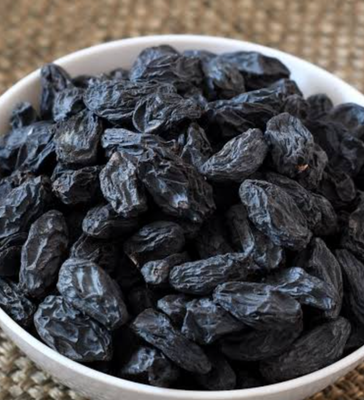
Black raisins
Black raisins (கருப்பு உலர் திராட்சை) – seedless, intensely sweet and iron-rich, with a deeper, wine-like flavour than golden raisins.
Dried from dark grapes, these raisins are almost black, soft rather than leathery, and noticeably richer than the yellow variety. The sweetness has a slight tartness behind it, which keeps them from tasting flat in cooking and makes them the better raisin when they need to stand up to ghee, jaggery or spice.
They are used constantly in Indian kitchens. Fried in ghee with cashews they finish payasam, sakkarai pongal, kesari and biryani. They go into fruit cake, granola and trail mix. Many households soak eight to ten overnight and drink the water in the morning, a long-standing home practice for iron and digestion.
Black raisins are a good source of iron, potassium, natural sugars and dietary fibre, and their fibre content is the reason they are traditionally associated with digestion.
Store airtight and away from heat. If they dry out or clump in the humidity, a brief soak in warm water restores them completely.
Order online or over WhatsApp, with cash on delivery available.
₹30
₹60 / 100g
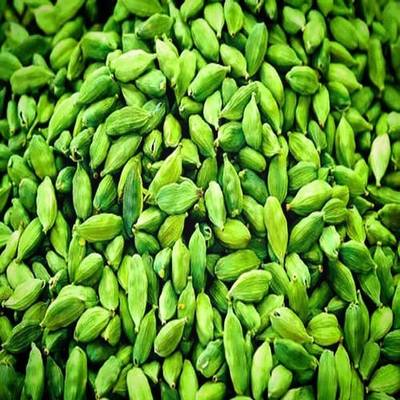
Cardamom
Cardamom (ஏலக்காய்) – the Queen of Spices, whose sweet, floral aroma defines Indian tea, sweets and biryani alike.
These are whole green cardamom pods, which is the form worth buying. The volatile oils that carry the aroma begin to fade the moment a pod is opened, so pods keep their fragrance for months while ready-ground powder loses it in weeks. Crush a pod between your fingers and the difference is obvious.
Its range is unusually wide. Whole pods go into biryani, pulao, garam masala and kashayam. Crushed seeds flavour payasam, kheer, halwa, ladoo and badam milk. A single pod transforms a cup of tea or filter coffee. In Kerala and Tamil Nadu it also finishes meat and vegetable curries, and it is chewed plain after a meal as a mouth freshener.
Cardamom has a long history in Ayurvedic practice for digestion, and is traditionally taken after heavy meals for that reason.
Store whole pods in an airtight container away from light and heat, and grind only what a recipe needs. Pods that have gone pale or lost their scent have lost most of their oils and are worth replacing.
Order online or over WhatsApp, with cash on delivery available.
₹200
₹40 / 10g

Cashew Chilly
Chilli cashews (மிளகாய் முந்திரி) – whole cashews roasted and tossed with chilli, for anyone who finds plain nuts a little too polite.
The cashew does the heavy lifting here: creamy, slightly sweet, with a clean snap. The chilli coating sits on top of that sweetness rather than burying it, so the heat builds over a few nuts instead of hitting all at once. They are ready to eat straight from the pack, with no roasting or seasoning needed at home.
These are evening snacks more than cooking ingredients. They go with tea and coffee, they hold their own next to drinks, and they are the bowl that empties first on a table of mixed nuts. Crushed roughly, they also work scattered over a salad or a chaat where you want crunch and heat in the same bite.
Because they are already roasted and coated, keep them tightly sealed: exposure to air softens the coating and dulls the crunch faster than it does with raw cashews. Finish an opened pack within a couple of weeks for the best texture.
Order online or over WhatsApp, with cash on delivery available.
₹55
₹110 / 100g
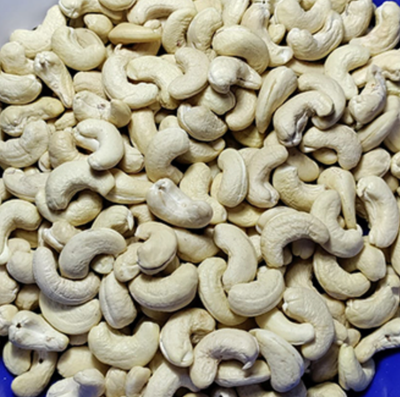
Cashew NutsW240
Cashew nuts (முந்திரி), W240 grade – our largest whole cashews, the ones to buy when the nut itself is meant to be noticed.
In cashew grading, the number counts kernels per pound, so a lower number means a bigger nut. W240 gives roughly 240 kernels to the pound, making these visibly larger and heavier than the more common W320. They are whole, unbroken, ivory-white and unsalted.
Size is worth paying for when the cashew is on show. These are the kernels for Diwali and wedding gift boxes, for roasting whole with a little salt and pepper as a party snack, for topping a tray of kaju katli, and for the fried-cashew garnish that sits on top of ghee rice, biryani and payasam. If you are grinding them into a gravy, our W320 or JH grades will do the same job for less.
Like all cashews, they bring plant protein, magnesium, copper and monounsaturated fats, with a natural sweetness that lets you cut back on added sugar.
Store airtight, away from heat and light; refrigerate in humid weather.
Order online or over WhatsApp, with cash on delivery available.
₹60
₹120 / 100g
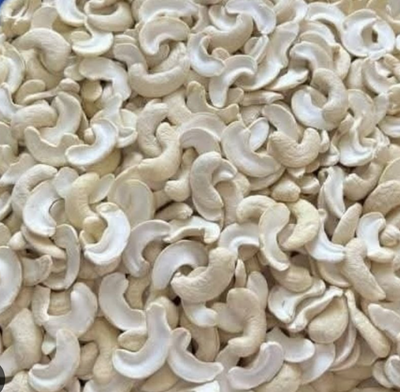
Cashew NutsJH
Cashew nuts (முந்திரி), JH grade – our value whole cashew, priced for the kitchens that cook with cashews every week rather than save them for guests.
JH is the most economical of the three cashew grades we carry. The kernels are a little less uniform in size and shape than our W240 and W320 wholes, but the flavour, creaminess and cooking behaviour are the same. If the cashews are going into a masala paste, a biryani, a pulao, or are being fried and crushed over a sweet, the shape stops mattering and the price starts to.
Use them where cashews are an ingredient rather than a garnish: ground with poppy seeds and coconut for kurma gravy, simmered into cashew paste for shahi dishes, fried in ghee for kesari and payasam, or blitzed into a dairy-free cashew cream.
Cashews carry plant protein, magnesium, copper and monounsaturated fats, and their natural sweetness means recipes often need less added sugar.
Keep them airtight and away from heat; refrigerate in humid weather to protect the oils and the snap.
Order online or over WhatsApp, with cash on delivery available.
₹45
₹90 / 100g
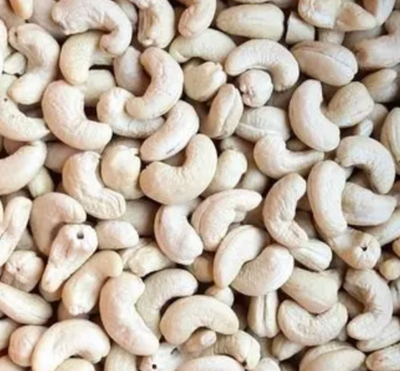
Cashew NutsW320
Cashew nuts (முந்திரி), W320 grade – the everyday standard whole cashew, and the grade most Indian home kitchens reach for by default.
W320 means roughly 320 kernels to the pound: smaller than our premium W240, larger and more uniform than our value JH grade. That middle position is exactly why it is the most widely used cashew in the country. The kernels are whole, unbroken, unsalted and creamy-white, big enough to look good as a garnish and priced sensibly enough to cook with freely.
This is the grade for general use. Fry them in ghee for payasam, kesari and sakkarai pongal. Scatter them over ghee rice, biryani and upma. Grind them into kurma and butter masala gravies. Roast them with salt and chilli for a snack. They also make excellent cashew butter and dairy-free cashew cream.
Cashews provide plant protein, magnesium, copper and monounsaturated fats, and their natural sweetness often means less added sugar is needed.
Keep them in an airtight container away from heat and sunlight, and refrigerate during humid months to protect both the oils and the crunch.
Order online or over WhatsApp, with cash on delivery available.
₹50
₹100 / 100g
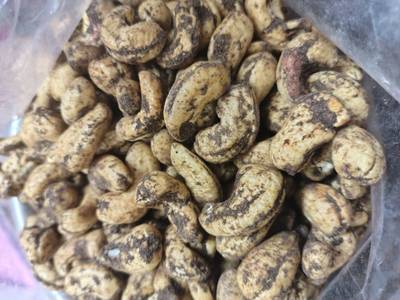
Cashew pepper
Pepper cashews (மிளகு முந்திரி) – whole cashews roasted with black pepper, a gentler, more aromatic alternative to chilli-coated nuts.
Pepper suits the cashew better than almost any other seasoning. It is warm rather than sharp, and it brings out the kernel's natural creaminess instead of competing with it. The result is a nut that tastes seasoned rather than spiced, with a slow peppery finish that lingers after the crunch. They arrive roasted and ready to eat.
This is the bowl to put out with filter coffee, with evening tea, or alongside drinks when you want something savoury that is not fried. They also work well crushed over curd rice, sprinkled on a salad, or folded into a South Indian style nut mix with roasted gram and curry leaves.
Being pre-roasted, they are more sensitive to air than raw cashews. Keep the pack tightly closed and away from heat, and finish it within a couple of weeks of opening so the pepper stays aromatic and the kernels stay crisp.
Order online or over WhatsApp, with cash on delivery available.
₹55
₹110 / 100g
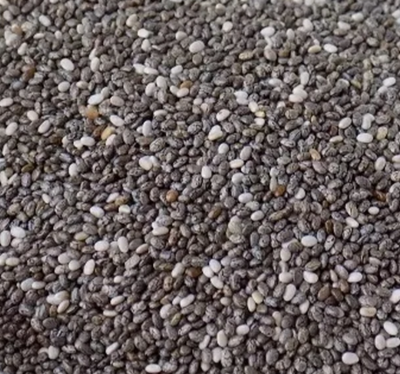
Chia Seeds
Chia seeds (சியா விதைகள்) – tiny black seeds that swell into a gel in liquid, the easiest way to add fibre and omega-3 to an ordinary day.
Chia is almost tasteless, which is its main advantage. It takes on whatever it is put into, and instead of contributing flavour it contributes texture: soaked in any liquid for fifteen minutes, each seed forms a soft gel coat and the whole mixture thickens.
That property drives every use. Two tablespoons in a glass of water with lemon makes the drink most people start with. Soaked overnight in milk with fruit, it becomes chia pudding. A spoonful thickens smoothies, curd and oatmeal. Ground chia mixed with water works as an egg substitute in baking, and dry seeds can simply be scattered over salad or dosa batter.
Chia is a notable plant source of omega-3 fatty acids and is high in dietary fibre, calcium and plant protein. The fibre is why it is associated with feeling full, and why it is worth drinking enough water alongside it.
Store airtight in a cool, dry place. The seeds keep well, but any moisture in the container will make them clump irreversibly.
Order online or over WhatsApp, with cash on delivery available.
₹25
₹50 / 100g
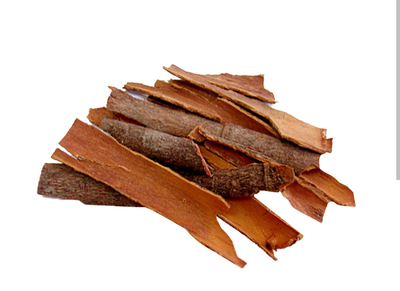
Cinnamon
Cinnamon (இலவங்கப்பட்டை) – warm, sweet and woody bark, one of the oldest spices in the world and a fixture in both Indian and Western kitchens.
Cinnamon's aroma comes from its oils, and those are strongest in the whole bark. A small piece dropped into hot oil at the start of cooking releases far more than the equivalent in powder, and whole quills keep their fragrance for a year or more where ground cinnamon fades within months.
In Indian cooking it is a base spice rather than a finishing one: a piece goes into the tempering for biryani, pulao, garam masala, korma and meat curries, where it provides warmth underneath everything else. In sweets and baking it moves to the front, flavouring cakes, buns, apple desserts, custard and mulled drinks. A stick simmered in tea or kashayam is a standard home remedy for a cold.
Cinnamon is rich in antioxidants and has a long traditional association with digestion and blood sugar, though it is a spice rather than a treatment.
Store whole quills in an airtight jar away from light and heat, and break or grind pieces only as needed.
Order online or over WhatsApp, with cash on delivery available.
₹25
₹5 / 10g
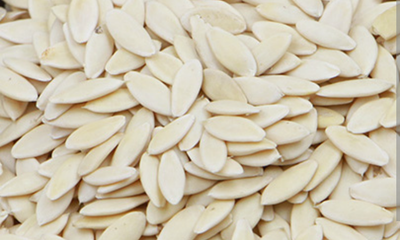
Cucumber Seeds
Cucumber seeds (வெள்ளரி விதைகள்) – small, pale, delicately crunchy kernels, valued in traditional Indian cooling preparations.
These are hulled cucumber seed kernels with a very mild, faintly sweet taste and a light crunch. The flavour is subtle enough that they disappear into whatever they are added to, contributing texture rather than taste, which is precisely how they are usually used.
In Indian households they are best known as a cooling ingredient for the summer months. They are ground into thandai and cooling milk drinks, blended into sherbets, and added to smoothies and lassi. They also work scattered over salads, curd rice and fruit bowls, folded into ladoo and energy bars, or simply dry-roasted with a little salt as a light snack.
Cucumber seeds provide plant protein, magnesium, and healthy fats, and are traditionally regarded as cooling in Ayurvedic practice, which is why they appear in summer preparations across India.
Store airtight in a cool, dry place, away from direct sunlight. Like other oily seeds they are best kept refrigerated in warm weather and used within a few months of opening.
Order online or over WhatsApp, with cash on delivery available.
₹45
₹90 / 100g

Dry Fig
Dry figs (உலர் அத்திப்பழம்) – chewy, honey-sweet and seed-speckled, one of the few dried fruits that is genuinely rich in both fibre and calcium.
Whole dried figs have a soft, dense flesh and hundreds of tiny seeds that give every bite a faint crunch. The sweetness is mellow and honeyed rather than sharp, and the flavour deepens considerably if you warm them or soak them before eating.
The most common practice here is to soak two or three overnight in water or milk and eat them in the morning, seeds and all. In cooking, figs are chopped into halwa, ladoo and barfi, simmered into anjeer payasam, blended into milkshakes, or layered into cakes and puddings. They also pair unusually well with savoury food: sliced onto a cheese plate or roasted alongside meat.
Figs are notable among dried fruits for their calcium and dietary fibre, and also supply iron, potassium and antioxidants.
Store in an airtight container, refrigerated in warm weather. A natural white bloom of fruit sugar sometimes appears on the surface over time; this is harmless and is not mould.
Order online or over WhatsApp, with cash on delivery available.
₹70
₹140 / 100g
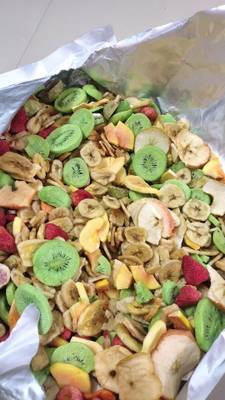
Dry Fruits Chips
Dried fruit chips – an assortment of thin, crisp fruit slices, dried rather than fried, for snacking without the oil.
Drying fruit into thin chips concentrates the sweetness and turns the texture crisp, giving you something that eats like a snack but is made of nothing but fruit. Because the slices are thin and light, a small quantity goes a long way, and there is no added oil involved.
They suit a lunchbox, a desk drawer or a long journey, and they are one of the easier ways to get fruit into children who resist the fresh version. Beyond eating them straight, they work crushed over yoghurt and oatmeal, folded into a homemade trail mix, or arranged on a dessert as an edible garnish.
Crispness is entirely dependent on keeping moisture out. Reseal the pack tightly each time, keep it away from the stove and any humidity, and finish it within a few weeks of opening. If the chips soften, a few minutes in a low oven will usually crisp them again.
Order online or over WhatsApp, with cash on delivery available.
₹75
₹150 / 100g

Dry kiwi
Dried kiwi (உலர் கிவி) – bright green, sweet-tart slices with a chewy bite, the most refreshing dried fruit in the pantry.
Dehydration concentrates the kiwi's natural acidity, so these slices taste considerably more intense than fresh fruit: sweet first, then a clean sour finish that cuts through the heaviness of nuts and other dried fruit. The colour stays a striking green, and the tiny black seeds keep their faint crunch.
They are best eaten as they are, and they are particularly good in a trail mix, where their tartness balances almonds, cashews and raisins. Chopped, they brighten granola, muesli, yoghurt bowls and fruit cake. They can also be steeped in hot water for a tangy fruit tea, or dropped into a jug of water with mint for something more interesting than plain water at a party.
Kiwi is known for its vitamin C and is a source of dietary fibre and potassium, though some vitamin C is lost in any drying process.
Keep the pack sealed and away from heat and humidity, both of which soften the slices and dull the colour.
Order online or over WhatsApp, with cash on delivery available.
₹30
₹60 / 100g
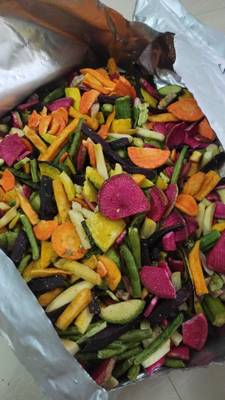
Dry vegetables
Dried vegetables (உலர் காய்கறிகள்) – dehydrated vegetable pieces that keep for months without refrigeration and rehydrate in minutes.
Drying removes the water that makes vegetables spoil while leaving the flavour behind in concentrated form. The result is a pantry ingredient that needs no fridge, takes up almost no space, and is ready whenever the fresh vegetable basket is empty.
They earn their place in three situations: cooking for one or two, where fresh vegetables go bad before they are used; travel and hostel kitchens, where storage is limited; and quick weekday meals, where there is no time to chop. Add them straight to soups, stews, sambar, khichdi, upma or instant noodles and they rehydrate in the cooking liquid. For stir-fries, soak them in warm water for fifteen to twenty minutes first, then drain and cook as usual.
Dried vegetables retain much of the fibre and many of the minerals of the fresh product, though some heat-sensitive vitamins are reduced in any drying process.
Store in an airtight container away from moisture and sunlight. Any dampness that gets in will cause clumping and shorten the shelf life considerably.
Order online or over WhatsApp, with cash on delivery available.
₹65
₹130 / 100g
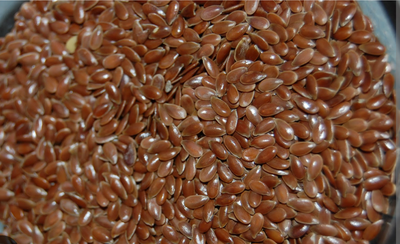
Flax Seeds
Flax seeds (ஆளி விதைகள்) – glossy brown seeds with a nutty taste, among the richest plant sources of omega-3 fatty acids.
Flax has a mild, pleasantly nutty flavour that becomes much more pronounced after a light dry-roast. Roasting is worth the two minutes it takes, both for taste and because it makes the seeds easier to grind.
One point matters more than any other with flax: the whole seed passes through largely undigested. To get the benefit, grind it. Roasted and powdered flax can be mixed into chapati dough, stirred into curd rice, sprinkled over dosa and idli, added to smoothies, or made into flaxseed chutney podi with garlic and red chilli, which is the most popular South Indian preparation. Ground flax mixed with water also works as an egg replacement in baking.
Flax seeds supply alpha-linolenic acid, an omega-3 fatty acid, along with dietary fibre and lignans.
Grind only what you will use within a week or two. The oils oxidise quickly once the seed coat is broken, so whole seeds keep far longer than powder. Store whole seeds airtight in a cool place and refrigerate any ground flax.
Order online or over WhatsApp, with cash on delivery available.
₹40
₹40 / 100g
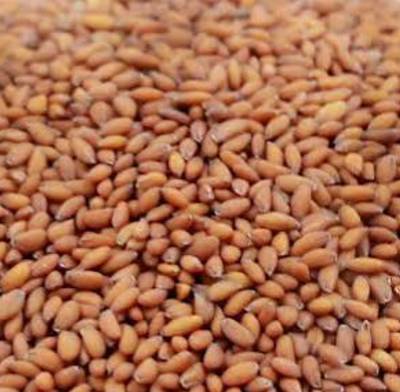
Halim seedSEED
Halim seeds (அளிவிரை) – tiny red-brown garden cress seeds, one of the richest plant sources of iron available in an Indian kitchen.
Also called aliv or garden cress seed, halim is small, slightly peppery, and swells into a gel in liquid much as chia does. The flavour has a faint bitterness and a mustard-like edge, which is why it is almost always combined with something sweet rather than eaten alone.
The traditional preparation is halim ladoo, made with jaggery, coconut and ghee, long given to new mothers and to anyone recovering their strength. Beyond that, a teaspoon is soaked in milk or water for fifteen minutes and drunk, often with jaggery to offset the bitterness. The soaked seeds can also be stirred into kheer, porridge, smoothies or lemon water.
Halim is best known for its iron content, and also supplies folate, plant protein, fibre and vitamin C. It is traditionally considered warming, which is why it is more often taken in cooler months.
Use it in small quantities: a teaspoon a day is the usual practice, not a handful. Store airtight in a dry place, away from moisture, which will cause the seeds to gel and clump.
Order online or over WhatsApp, with cash on delivery available.
₹25
₹50 / 100g
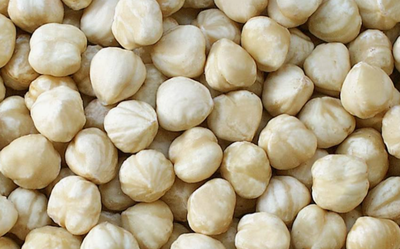
Hazelnut
Hazelnuts (ஹேஸல்நட்) – sweet, round, distinctly aromatic kernels, best known as the nut behind chocolate spreads and European baking.
Hazelnuts taste unlike any other nut in an Indian pantry: buttery and sweet with a toasted, almost cocoa-like aroma that comes forward strongly once they are warmed. Dry-roast them for a few minutes and rub off the skins in a cloth, and the flavour roughly doubles. That single step is worth doing before almost any use.
They are a baker's nut above all. Ground, they go into tortes, biscotti and praline. Chopped, they fold into brownies, cookies and granola. Blended with cocoa, they make homemade chocolate hazelnut spread that is far better than the jarred version. They are also excellent simply roasted and salted as a snack, or scattered over coffee desserts and ice cream.
Hazelnuts are a source of vitamin E, monounsaturated fats, fibre and manganese.
Their high oil content makes them less forgiving than harder nuts: keep them airtight, away from light and heat, and refrigerate in warm or humid weather to keep them from going stale.
Order online or over WhatsApp, with cash on delivery available.
₹145
₹290 / 100g
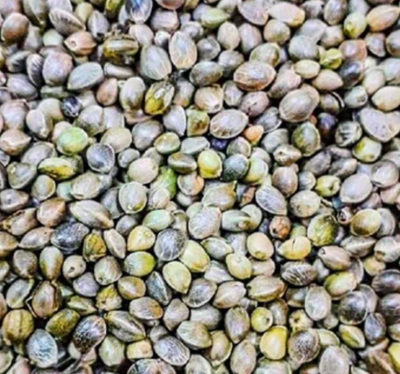
Hemp seeds
Hemp seeds (ஹெம்ப் விதைகள்) – soft, hulled green-white hearts with a mild, buttery flavour and an unusually complete protein profile.
Hulled hemp seeds, sometimes sold as hemp hearts, are tender rather than crunchy, and taste gently nutty, somewhere between a sunflower seed and a pine nut. They need no roasting, grinding or soaking, which makes them the least demanding seed on this list: the pack opens and they are ready.
Because they are soft and mild, they go on top of things rather than into them. Spoon them over curd rice, salads, oatmeal, poha and smoothie bowls. Blend them into smoothies and dressings, where they add body. Stir them into chapati dough or sprinkle over avocado toast. They can also be blended with water to make hemp milk.
Hemp seeds are notable for containing all nine essential amino acids, and they supply plant protein, omega-3 and omega-6 fatty acids, magnesium and iron.
They are high in oil and stale faster than harder seeds. Keep them airtight and refrigerated after opening, particularly in warm weather, and use within a couple of months.
Order online or over WhatsApp, with cash on delivery available.
₹40
₹80 / 100g
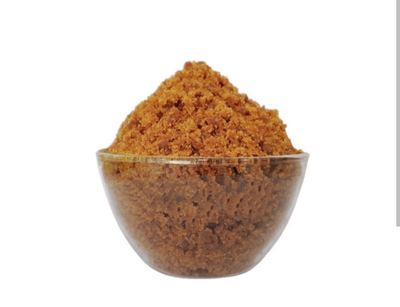
Jaggery
Jaggery (வெல்லம்) – unrefined cane sugar with its molasses left in, the traditional sweetener of South Indian kitchens.
Unlike white sugar, jaggery is not stripped during processing, which is why it keeps its dark colour, its mineral content and a deep, faintly smoky caramel flavour. That flavour is not interchangeable with sugar. It is the reason chakkarai pongal, adhirasam, ellu urundai and payasam taste the way they are supposed to.
Its uses run through the whole South Indian repertoire. It sweetens pongal and payasam at festivals, balances tamarind in sambar and rasam, binds sesame and peanut ladoo, and is stirred into coffee and herbal kashayam. Many households simply finish a meal with a small piece of jaggery, a practice traditionally associated with digestion.
Because it is unrefined, jaggery retains small amounts of iron, potassium, magnesium and calcium that refined sugar loses, although it remains a sugar and is best used in moderation.
Store in a dry, airtight container. Jaggery draws moisture readily in humid weather and will soften or weep if left open. Break off what you need and reseal the rest promptly.
Order online or over WhatsApp, with cash on delivery available.
₹60
₹12 / 100g
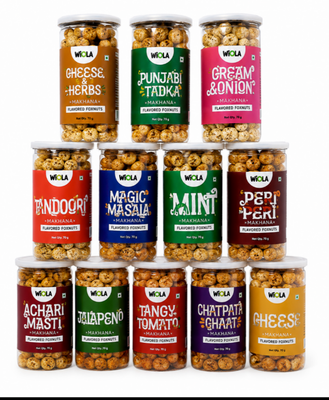
Makhana Flavoured
Flavoured makhana (சுவையூட்டிய தாமரை விதை) – puffed lotus seeds already roasted and seasoned, a ready-to-eat snack with none of the frying.
Where plain makhana asks you to roast and season it yourself, this version arrives finished. The seeds have been roasted crisp and coated with seasoning, so the pack opens straight onto the table. The texture is the same airy, satisfying crunch, with flavour carried on the outside of each puff.
This is the pack to keep for evenings, lunchboxes, desk drawers and journeys, and the one to put out when guests arrive and you want something better than crisps. Because makhana is light, a generous-looking bowl is a modest quantity, and it fills you up in a way fried snacks tend not to.
Makhana is naturally low in fat and gluten-free, and provides plant protein, magnesium, potassium and calcium. Roasting rather than frying is what keeps it that way.
Crispness is the thing to protect. Reseal the pack firmly each time and keep it away from humidity; if it does soften, a couple of minutes in a dry pan on low heat brings the crunch back.
Order online or over WhatsApp, with cash on delivery available.
₹180
₹257 / 100g
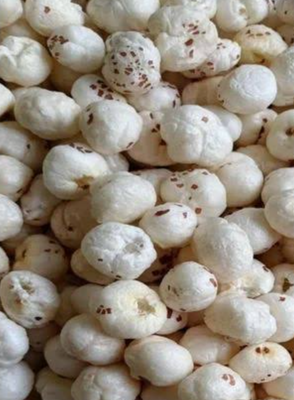
Makhana plain
Plain makhana (தாமரை விதை) – light, airy puffed lotus seeds, the rare snack that is genuinely filling without being fried.
Makhana, also called fox nuts, are the puffed seeds of the lotus. Plain and unroasted they taste of very little, which is exactly the point: they are a blank canvas, and they crisp beautifully when dry-roasted in a pan for a few minutes with or without a little ghee.
Roast them and season however you like: salt and pepper, chaat masala, ghee and turmeric, or chilli powder. Beyond snacking, makhana is used in kheer, where it softens into a creamy pudding, and in North Indian gravies where it is roasted and added whole or ground as a thickener. They also work in a savoury mix with curry leaves, peanuts and roasted gram.
Makhana is low in fat, gluten-free, and a source of plant protein, magnesium, potassium and calcium, which is why it has become a standard choice for fasting days and weight-conscious snacking.
They absorb moisture readily and go soft. Keep the pack tightly sealed; if they lose their crispness, two minutes in a dry pan restores it completely.
Order online or over WhatsApp, with cash on delivery available.
₹75
₹150 / 100g
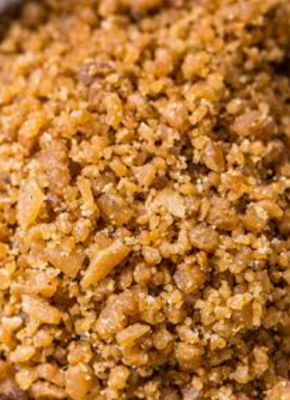
Panakarkandu
Panankarkandu (பனங்கற்கண்டு) – crystallised palm sugar, the traditional Tamil sweetener kept in almost every household for coughs, coffee and pongal.
Made by crystallising the sap of the palmyra palm, panankarkandu comes as irregular pale-gold crystals with a clean, gentle sweetness and a faint, almost floral note that neither white sugar nor jaggery reproduces. It dissolves slowly, which is why it is often just held in the mouth rather than cooked.
Its best-known use is the household remedy for a dry throat or cough: a piece of palm candy on its own, or crushed and mixed with a little ghee or warm milk at night. Beyond that, it sweetens filter coffee and herbal kashayam, goes into panagam during Ram Navami, and is used in place of sugar in payasam and pongal by families who prefer it.
As a minimally processed palm product, it retains trace minerals that refined sugar does not, and it is traditionally considered gentler than white sugar, though it remains a sugar.
Store in a dry, airtight jar. Palm candy absorbs moisture quickly and the crystals will fuse into a block if left exposed to humid air.
Order online or over WhatsApp, with cash on delivery available.
₹9
₹18 / 100g
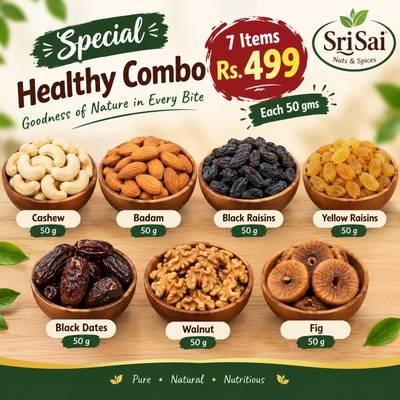
COMBO
Combo Rs 499
7 Items600g
100g Almond100g Cashew Nuts50g Black raisins+4 more
₹499₹528Save ₹29
5% OFF